Cloud computing has changed the way businesses build, manage, and use technology. Instead of depending entirely on physical servers and expensive hardware, organizations can now use flexible computing resources over the internet. At the center of this transformation is Cloud Architecture, which defines how cloud-based systems are designed, connected, secured, and managed.
Whether you are a beginner, developer, IT professional, or business owner, understanding cloud architecture can help you make better technology decisions. A well-designed architecture can improve performance, reduce costs, increase security, and make applications easier to scale.
In this guide, we will explore what cloud architecture means, its main components, different types, benefits, challenges, and best practices.
What Is Cloud Architecture?
Cloud architecture is the overall design and structure of a cloud computing environment. It explains how different cloud resources and services work together to deliver applications, websites, databases, storage, and other digital services.
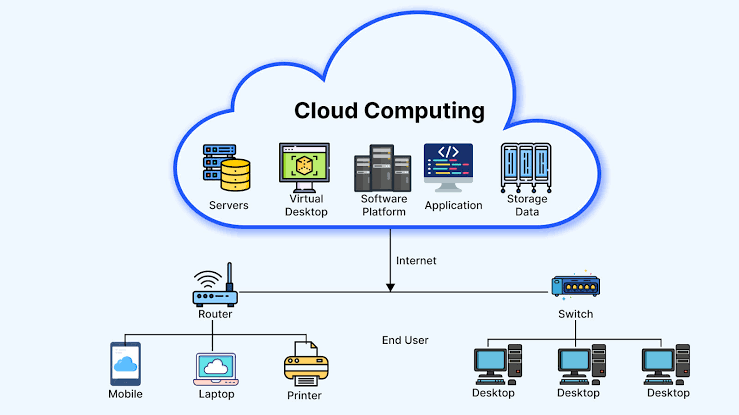
A typical cloud architecture can include servers, databases, networks, storage systems, security tools, application services, and monitoring solutions. These components communicate with each other to provide users with reliable and scalable digital services.
Unlike traditional IT infrastructure, cloud architecture is designed to take advantage of resources that can be created, modified, or removed when needed.
For example, an online store may use cloud servers to run its website, cloud databases to store customer information, object storage for product images, and security services to protect user data. During a major sale, the company can increase its computing resources to handle additional visitors.
Why Is Cloud Architecture Important?
Modern applications often need to serve users from different locations while handling changing amounts of traffic. Traditional infrastructure can make this difficult because companies may need to purchase and maintain additional physical hardware.
Cloud architecture provides a more flexible approach.
A properly designed cloud environment allows organizations to:
- Scale applications when demand increases
- Reduce unnecessary infrastructure costs
- Improve application availability
- Protect sensitive information
- Deploy applications faster
- Monitor systems more effectively
- Support remote users and distributed teams
Good architecture also makes it easier to identify potential problems before they affect customers.
Key Components of Cloud Architecture
Cloud architecture consists of several important components. Each component has a specific role in creating a functional cloud environment.
1. Compute Resources
Compute resources provide the processing power required to run applications and services. Depending on the architecture, these resources may include virtual machines, containers, or serverless computing services.
Organizations can select computing resources according to their workload requirements. A small application may need only a few resources, while a large platform may require many computing instances working together.
2. Storage
Cloud storage allows organizations to store files, documents, images, videos, backups, and other types of information.
Different storage technologies are suitable for different purposes. Object storage is commonly used for large collections of files, while block storage can be useful for applications that require high-performance data access.
Cloud storage also makes it possible to increase capacity without purchasing additional physical storage devices.
3. Databases
Databases are another essential part of cloud architecture. They store structured and unstructured information used by applications.
Depending on application requirements, organizations may choose relational databases, NoSQL databases, data warehouses, or other specialized database technologies.
The right database architecture depends on factors such as performance, scalability, data structure, availability, and consistency.
4. Networking
Networking connects different components within a cloud environment and allows applications to communicate with users and external services.
A cloud network can include virtual networks, subnets, routing systems, load balancers, gateways, and firewalls.
A carefully planned network architecture can improve both performance and security by controlling how data moves between different resources.
5. Security
Security should be considered from the beginning of the architecture design process rather than added later.
Cloud security can involve identity management, authentication, encryption, access controls, network security, logging, and threat detection.
Organizations should follow the principle of least privilege, which means users and applications should receive only the permissions they actually need.
Types of Cloud Architecture
Cloud environments can be designed in different ways depending on business requirements.
Public Cloud Architecture
A public cloud uses infrastructure provided by a third-party cloud service provider. Organizations share the provider’s underlying infrastructure while maintaining separate resources and security controls.
Public cloud architecture is popular because it provides flexibility and allows businesses to use technology without managing their own physical data centers.
Private Cloud Architecture
A private cloud is designed for the exclusive use of a single organization. It can provide greater control over infrastructure and may be suitable for organizations with specific security, compliance, or operational requirements.
However, private cloud environments can require more management and investment than public cloud solutions.
Hybrid Cloud Architecture
Hybrid cloud architecture combines private and public cloud environments. An organization may keep certain workloads in a private environment while using public cloud resources for other applications.
This approach can provide flexibility while allowing businesses to maintain control over sensitive systems.
Multi-Cloud Architecture
Multi-cloud architecture involves using services from more than one cloud provider. Organizations may adopt this strategy to avoid depending on a single provider or to use specialized services from different platforms.
However, managing multiple providers can increase operational complexity, so careful planning is important.
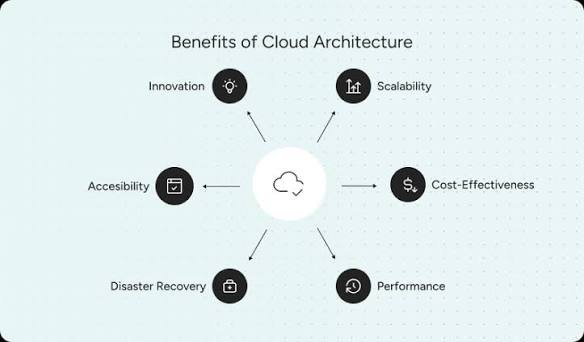
Benefits of Cloud Architecture
One of the biggest advantages of cloud architecture is scalability. Businesses can increase or decrease computing resources according to demand.
Another important benefit is cost efficiency. Instead of purchasing large amounts of hardware in advance, organizations can often pay for resources based on their usage.
Cloud architecture can also improve reliability. Applications can be designed with redundant resources so that the failure of one component does not necessarily bring down the entire system.
Flexibility is another major advantage. Development teams can create, test, and deploy applications without waiting for physical infrastructure to be prepared.
Cloud environments also support automation, which can reduce repetitive manual work and improve consistency.
Cloud Architecture and Scalability
Scalability is particularly important for modern websites and applications.
Imagine a website that normally receives 10,000 visitors per day but suddenly receives 500,000 visitors because of a successful marketing campaign. A fixed infrastructure might struggle to handle the additional traffic.
A scalable cloud architecture can respond by adding additional computing resources when necessary.
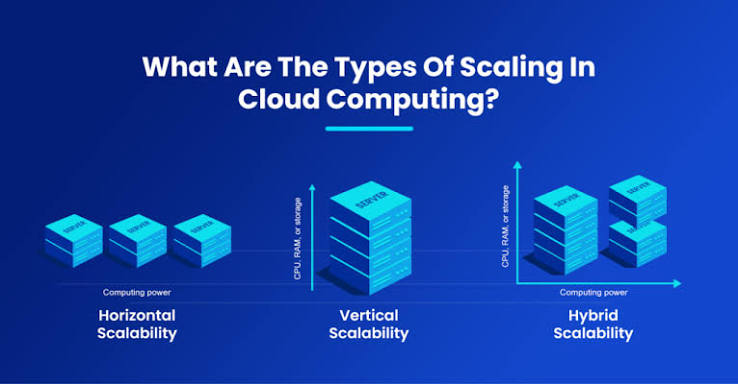
There are two common approaches to scaling.
Vertical scaling means increasing the resources of an existing system, such as adding more memory or processing power.
Horizontal scaling means adding more instances or servers to distribute the workload.
Horizontal scaling is commonly used in applications designed to handle large and unpredictable workloads.
High Availability and Reliability
Users expect online services to remain available. Even a short outage can affect customer trust and business revenue.
Cloud architecture can improve availability through techniques such as redundancy, load balancing, automated recovery, and distributing resources across separate locations.
For example, if one application server becomes unavailable, a load balancer can redirect users to another healthy server.
However, simply using cloud services does not automatically guarantee high availability. Availability must be deliberately designed into the architecture.
Cloud Architecture Security Best Practices
Security is one of the most important considerations when designing a cloud environment.
Organizations should use strong authentication methods and restrict access based on user roles. Sensitive information should be protected with encryption both during transmission and, where appropriate, while stored.
Regular monitoring and logging can help identify unusual activity. Security updates should also be applied consistently.
Backups are equally important. A reliable backup strategy can help organizations recover from accidental deletion, hardware problems, software failures, or security incidents.
It is also important to regularly review permissions. Old accounts and unnecessary access rights can create security risks.
Challenges of Cloud Architecture
Although cloud architecture offers many benefits, it also introduces challenges.
One common challenge is complexity. Large cloud environments can contain hundreds or thousands of resources, making them difficult to manage without proper organization.
Cost management can also become difficult. Cloud resources are easy to create, but unused resources may continue generating expenses.
Security requires continuous attention as well. Misconfigured permissions, exposed services, and poor security practices can create vulnerabilities.
Organizations may also experience difficulties when moving existing applications from traditional infrastructure to the cloud. Legacy applications sometimes require significant changes before they can take full advantage of cloud capabilities.
Best Practices for Designing Cloud Architecture
A successful cloud architecture should begin with clear business and technical requirements.
Before selecting services, organizations should determine expected traffic, performance requirements, security needs, data requirements, availability goals, and budget limitations.
The architecture should be designed for scalability and failure. Applications should not depend unnecessarily on a single component.
Automation is also valuable. Infrastructure as code, automated testing, deployment pipelines, and monitoring can make cloud environments easier to manage.
Organizations should continuously monitor performance and costs. An architecture that works well today may need to be adjusted as the business grows.
The Future of Cloud Architecture
Cloud architecture continues to evolve as new technologies become available. Serverless computing, containers, artificial intelligence, edge computing, and automated infrastructure management are influencing modern application design.
Organizations are increasingly building systems that can process information closer to users while using cloud platforms for centralized management and large-scale computing.
Artificial intelligence is also creating new infrastructure requirements. AI applications may need specialized computing resources, large-scale data storage, and efficient data processing systems.
As technology continues to develop, cloud architecture will remain an important part of digital transformation.
requently Asked Questions About Cloud Architecture
1. What is Cloud Architecture?
Cloud Architecture is the design and structure of cloud-based systems. It includes components such as servers, storage, databases, networks, security tools, and applications that work together to deliver cloud services.
2. Why is Cloud Architecture important?
Cloud Architecture is important because it helps businesses build systems that are scalable, secure, reliable, and cost-effective. A well-designed architecture can also improve application performance and availability.
3. What are the main components of Cloud Architecture?
The main components include compute resources, cloud storage, databases, networking, security services, monitoring tools, and application services. These components work together to support cloud-based applications.
4. What are the different types of Cloud Architecture?
The major types include public cloud, private cloud, hybrid cloud, and multi-cloud architecture. Each type is designed for different business, security, and operational requirements.
5. How does Cloud Architecture improve scalability?
Cloud Architecture allows organizations to increase or decrease computing resources according to demand. This helps applications handle sudden increases in traffic without requiring businesses to purchase large amounts of physical hardware.
6. Is Cloud Architecture secure?
Cloud Architecture can be highly secure when it is properly designed and managed. Organizations should use strong authentication, access controls, encryption, monitoring, regular updates, and appropriate backup strategies.
7. What is the difference between Cloud Architecture and traditional IT infrastructure?
Traditional IT infrastructure usually depends heavily on physical servers and hardware managed by an organization. Cloud Architecture uses flexible cloud resources that can often be provisioned, scaled, and managed more quickly.
8. What is hybrid Cloud Architecture?
Hybrid Cloud Architecture combines private and public cloud environments. It allows organizations to keep certain workloads in a private environment while using public cloud resources for other applications and services.
9. How can businesses reduce Cloud Architecture costs?
Businesses can control cloud costs by monitoring resource usage, removing unnecessary resources, selecting appropriate service sizes, automating resource management, and regularly reviewing their cloud infrastructure.
10. What is the future of Cloud Architecture?
The future of Cloud Architecture is likely to include greater use of serverless computing, containers, artificial intelligence, edge computing, automation, and advanced cloud security technologies.
Conclusion
Cloud Architecture provides the foundation for designing reliable, scalable, secure, and efficient cloud-based applications. It brings together computing resources, storage, databases, networking, security, and monitoring into a structured environment.
For businesses, a well-planned cloud architecture can provide flexibility and support long-term growth. For developers and IT professionals, understanding architectural principles can help them create applications that perform reliably under changing workloads.
The most successful cloud environments are not simply built by selecting cloud services. They are carefully designed around business goals, security requirements, performance expectations, scalability, reliability, and cost.
As more organizations move their applications and services to the cloud, knowledge of cloud architecture will continue to be valuable for anyone working in modern technology.